
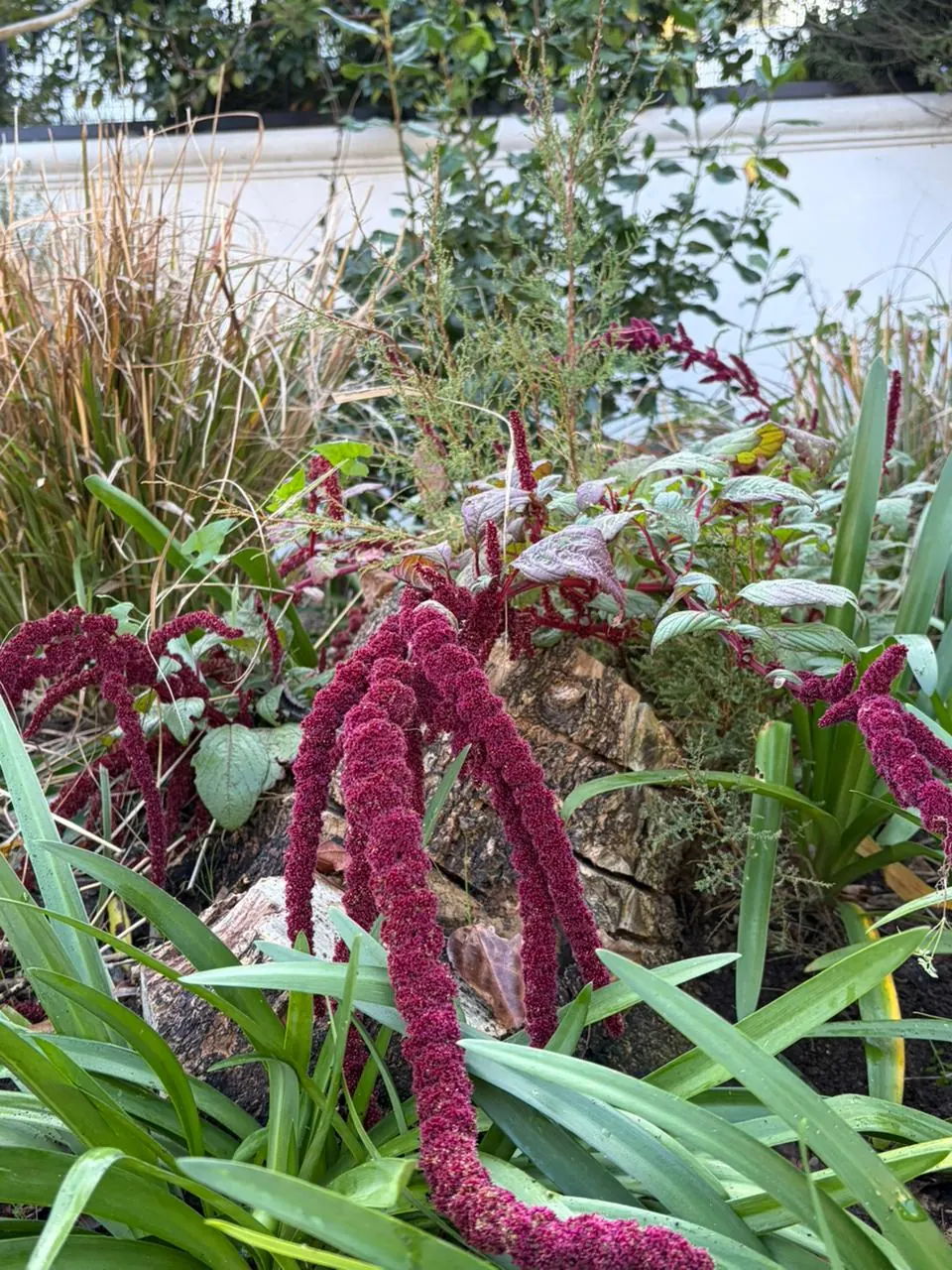
Ask us what we'd plant if a client gave us a blank slate and no budget limit, and nine times out of ten we'd still reach for the same handful of indigenous species. The Winelands has hot, dry summers, cool wet winters and soils that swing from deep red clay in Paarl to sandy, rocky slopes above Franschhoek — often within a few hundred metres of each other. Plants that evolved here handle all of that without fuss. They need less water, less feeding and fewer replacements than imported plants, and they bring birds, bees and butterflies into the garden in a way a bed of petunias never will.
That doesn't mean every indigenous plant works everywhere, or that "indigenous" automatically means "easy." Some are genuinely bulletproof. Others, like proteas, are fussier than people expect. Here's what we actually use, what each one does well, and where we've seen people go wrong with them.
Before you buy anything: check your soil and drainage
The quickest way to avoid an expensive mistake is a ten-minute test you can do with a spade and a hosepipe. Dig a hole about 30 cm deep where you want to plant, fill it with water and let it drain away, then fill it again and time it. If the second fill is gone within a few hours, you have free-draining soil and almost everything on this list will be happy. If there's still water standing the next morning, you have a drainage problem, and it's worth fixing before a single plant goes in.
Heavy clay isn't a dead end. Raising the bed into a gentle mound, mixing in coarse sand or grit rather than rich compost, and choosing plants that cope with wet winters (wild iris, agapanthus and restios are all good here) will get you most of the way. Proteas and pincushions are the ones to leave out of heavy soil, however good they look at the nursery.
Structure and height
- Cape thatching reed (Chondropetalum tectorum): tall, upright restios that add movement and a natural, fynbos look. Excellent against walls and in modern designs.
- Wild olive (Olea europaea subsp. africana): a tough, evergreen tree that gives shade and structure, and handles dry summers well.
- Karee (Searsia lancea): a graceful, drooping tree that is very drought-tolerant. A good choice for larger gardens.
Colour and flowers
- Wild dagga (Leonotis leonurus): bright orange flower spikes that attract sunbirds. Fast-growing and forgiving.
- Red hot pokers (Kniphofia): bold, upright flowers that work well in mass plantings.
- Agapanthus: a reliable classic for borders and entrances. Flowers in summer and copes with a dry spell.
- Proteas and pincushions: spectacular, but fussy. They want well-drained, low-nutrient soil, and normal garden fertiliser can kill them, so we check the soil before recommending them.
Fillers, edging and ground cover
- Wild rosemary (Eriocephalus africanus): silvery, scented foliage that is perfect for dry, sunny beds.
- Wild garlic (Tulbaghia violacea): neat clumps with pretty mauve flowers. Very hardy and great for edging paths.
- Silver carpet (Dymondia margaretae): a low, tough ground cover that handles light foot traffic between stepping stones.
- Wild iris (Dietes): clean, upright leaves and delicate flowers, good in sun or light shade.
Plants that need a little planning
A few of our favourites will happily take over if you let them. Wild dagga gets big and sprawling in good soil, so give it room or plan to prune it hard each year. Agapanthus multiplies into dense clumps that can crowd out smaller neighbours, and wild garlic clumps widen steadily and will creep towards the lawn edge. Silver carpet is slow to settle in, so give it a season or two before it takes any foot traffic. None of this is a reason to avoid them. It's a reason to give each plant the space it will want in three years, not the space it needs on planting day.
The mistake we see most often
People treat indigenous plants like houseplants and love them to death with kindness — specifically, too much water and too much rich compost. Most of the plants on this list evolved in lean, fast-draining soil and a feast-or-famine rainfall pattern. Overwater them or plant them in heavy, waterlogged clay and the roots rot before the plant ever gets a chance to toughen up. Proteas and pincushions are the classic casualties here: a well-meaning dose of general garden fertiliser (high in phosphorus) can kill a protea outright, which is why we always test the soil before putting one in the ground.
The fix is simple once you know it: water generously for the first growing season while roots establish, then step back. Indigenous plants that are babied forever stay shallow-rooted and dependent. Ones that are weaned off regular watering develop the deep root systems that make them drought-tolerant in the first place.
Getting indigenous plants through their first year
Planting time matters more than most people think. In the Winelands, autumn is our favourite window: the soil is still warm, the winter rains do a lot of the watering for you, and the roots have months to settle in before the first heatwave. Spring works if you're prepared to water. Planting in the middle of summer means every plant is on life support, and you'll use more water than the plant will ever save you. Our month-by-month planting guide has the full calendar.
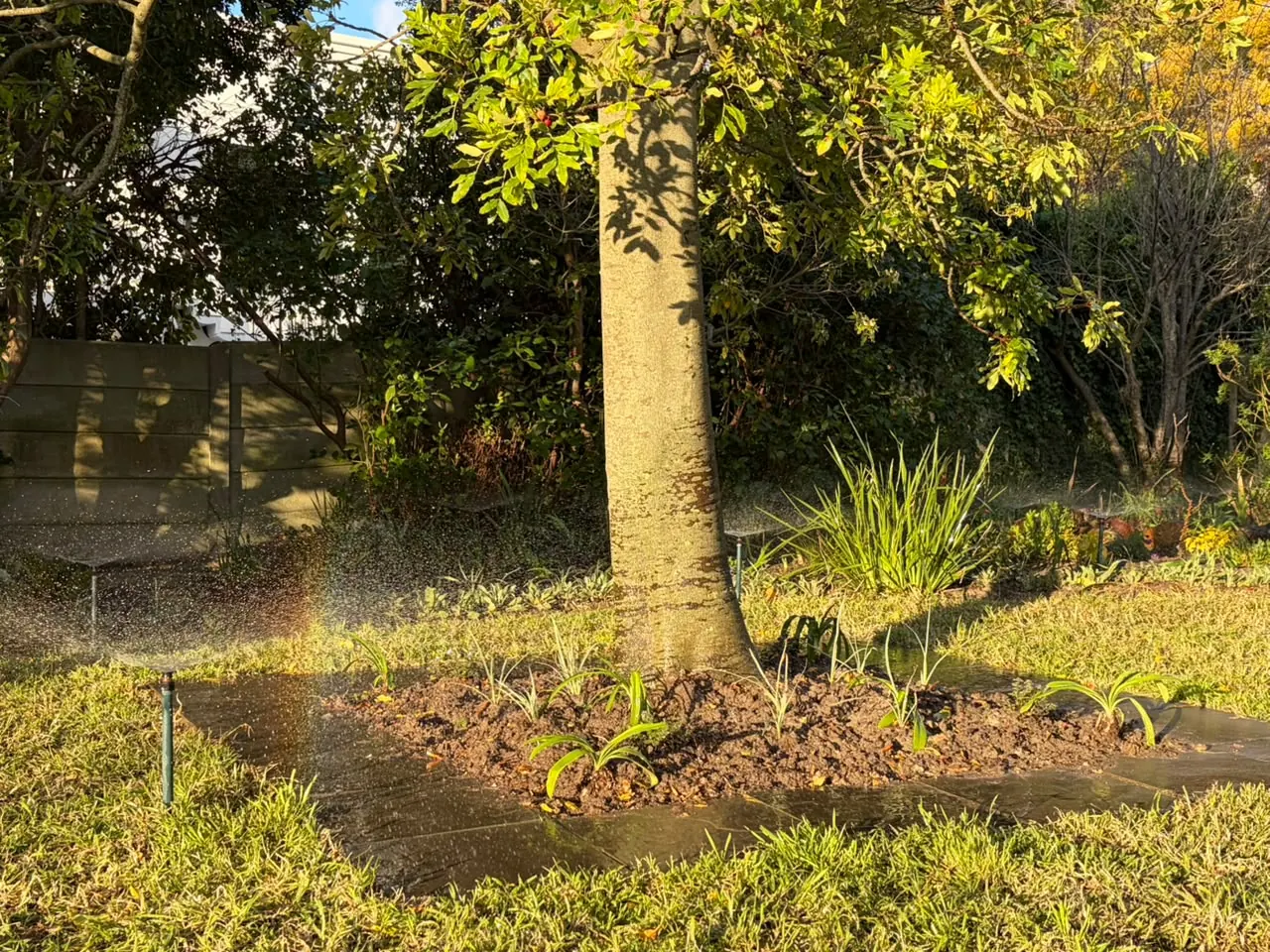
For the first summer, as a rule of thumb, water deeply once or twice a week rather than a little every day, and put the water where the roots are. A simple drip line does that far better than a sprinkler, which is why we usually pair new indigenous beds with drip. Our comparison of drip vs sprinkler irrigation explains why. Finish with a 5 to 8 cm layer of mulch, kept a few centimetres back from the stems. It holds moisture, keeps the roots cool and suppresses weeds, and it's the cheapest insurance you can buy.
What the yearly care routine looks like
Indigenous doesn't mean ignored, but the routine is short. Cut wild dagga back hard in late winter so it stays compact instead of leggy. Remove spent flower stalks from agapanthus and red hot pokers once they've finished, and tidy dead leaves out of wild iris clumps. Give wild rosemary and other silver-leaved plants a light trim after flowering rather than a hard cut into old wood. Proteas want only light tip pruning after flowering and no heavy feeding.
Top up the mulch once a year, ideally in early spring, and check your irrigation at the same time. Our spring checklist for a summer-ready garden covers the full list. An hour or two of attention each season does more for these plants than any amount of fertiliser.
Wildlife, and a word about fire
One of the best things about an indigenous garden is how quickly it fills with life. Wild dagga and red hot pokers bring in sunbirds, wild garlic and agapanthus feed the bees, and restios and wild olive give birds somewhere to shelter. If you've ever wished your garden felt less like a display and more like somewhere things actually live, this is the quickest route.
The flip side is that fynbos-style plants, especially restios and dry grasses, burn readily. Keep the tallest, driest planting away from the house and any thatched roofs, and clear dead material out of the beds before summer. It's the same thinking as the fire-safety step in our spring checklist.
How to choose
Start with your site, not the plant list. Sun, wind, soil type and how much water you can realistically give the garden decide what will work. A plant that thrives on a Pniel slope may sulk in a shady courtyard in Franschhoek, and a restio that loves the wind exposure on an open Paarl property might look ragged tucked into a sheltered Stellenbosch townhouse garden.
Group plants with similar needs together, and mulch well. Even tough indigenous plants need regular watering for their first summer while the roots establish — the same thinking behind our approach to water-wise garden design, which pairs well with an indigenous plant palette. If you're renovating an existing garden rather than starting from scratch, it's worth doing this in phases: swap out the thirstiest, least rewarding beds first, and use what you learn there before committing the whole garden.
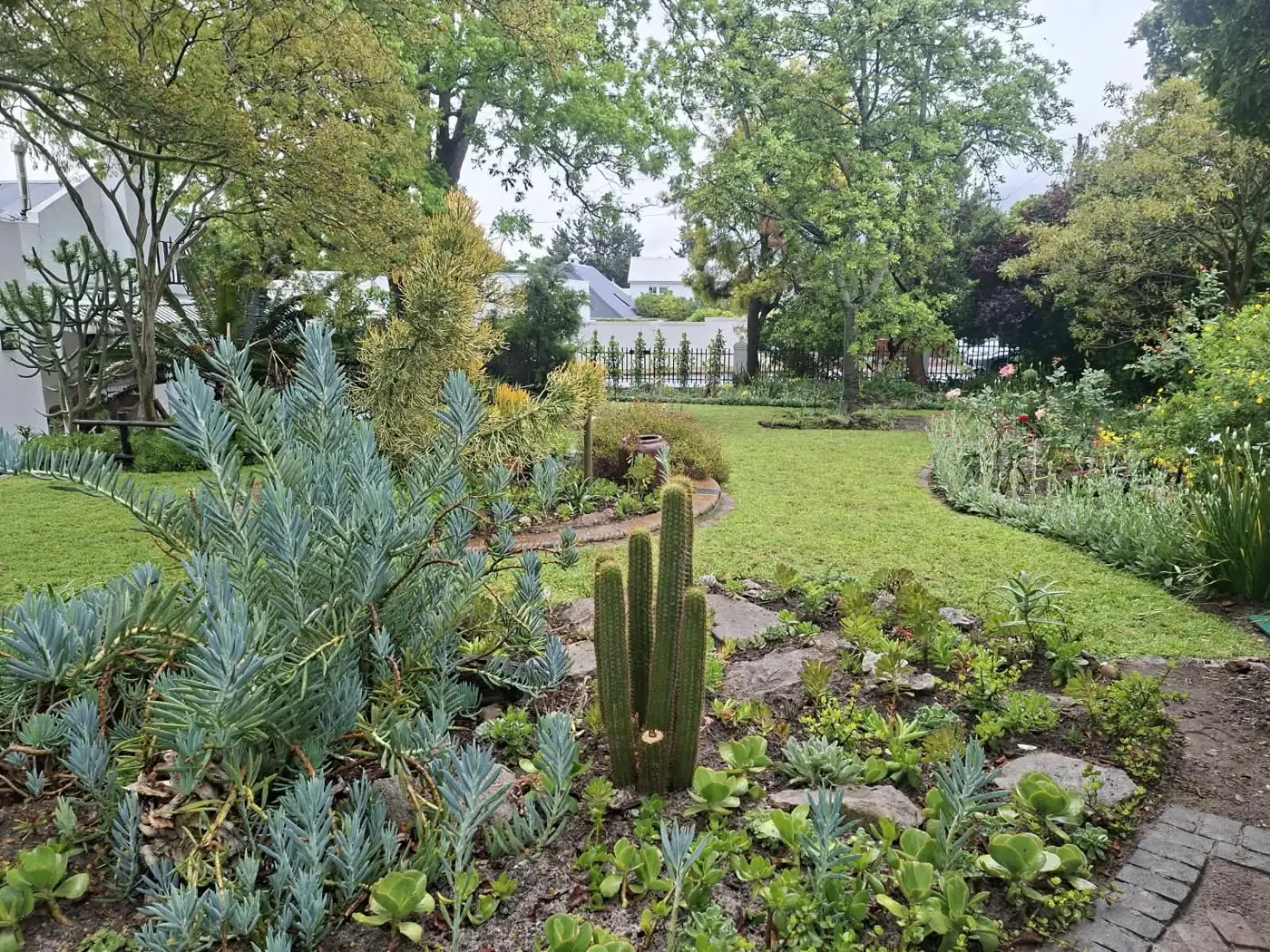
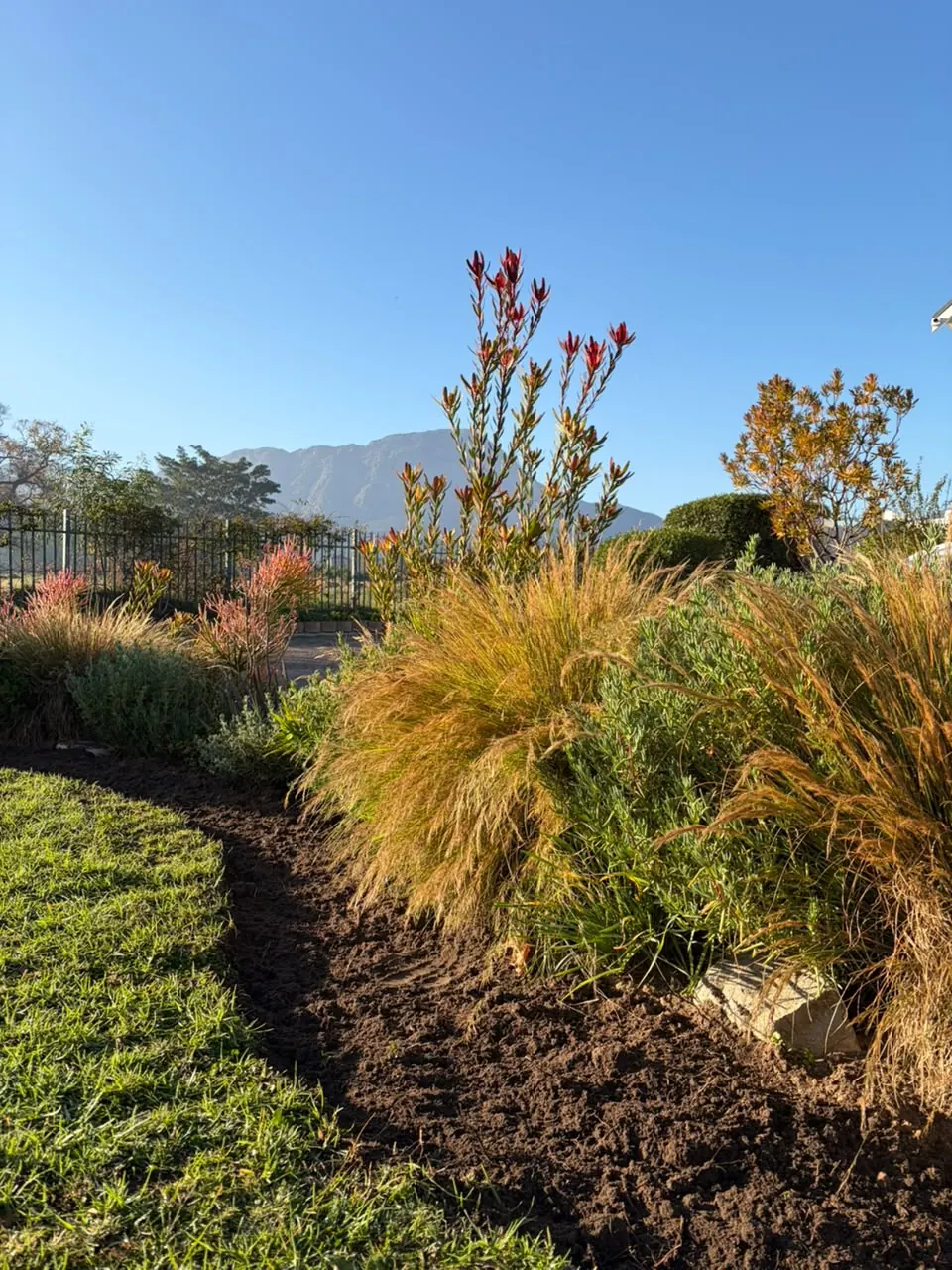
We also get asked whether indigenous plants can sit alongside the roses, agapanthus and other garden favourites people already love. They can, and often should — a garden that's 100% indigenous can feel a little samey, while one that uses indigenous species for the structural "bones" (trees, hedging, ground cover) and brings in a few exotic flowering accents for colour tends to feel the most considered. You can see this mixed approach in practice in our completed garden projects, including the Franschhoek garden pictured above.
For guesthouses and estates, an indigenous palette has an extra advantage: it looks right for the setting, and it keeps maintenance and water use predictable across a large area. We've written separately about how landscaping for wine estates and guesthouses differs from an ordinary residential garden.
Want a plant palette built for your actual site, not a generic list? We'll walk your property, check the soil and light, and put together a planting plan as part of our landscaping design service. Free site visit, written quote within 48 hours. Call or WhatsApp 071 719 1285.
Common Questions
More Guides
 Guide
 Guide