
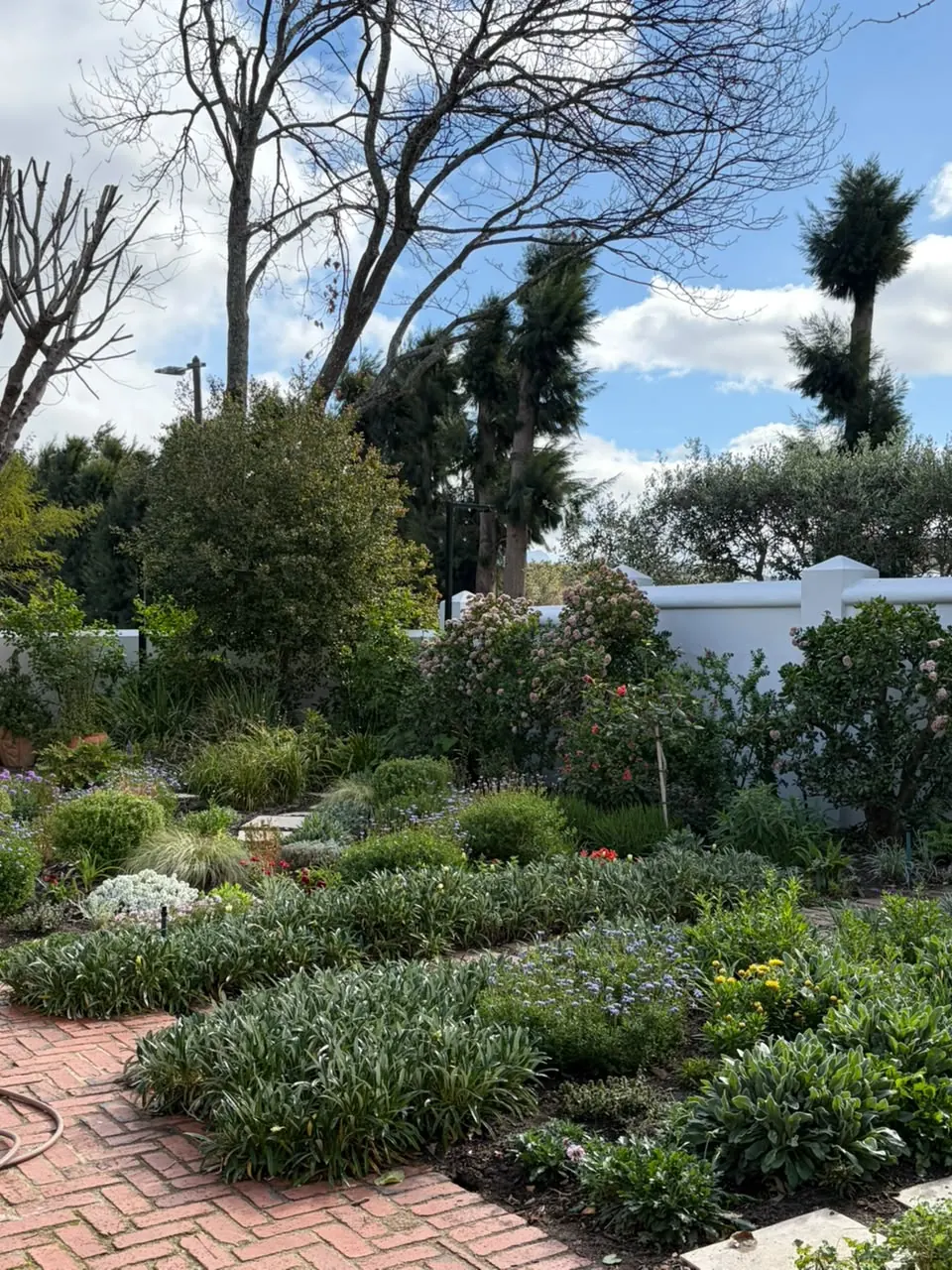
This is one of the first questions we walk through on almost every site visit, usually before the client has even finished describing what they want the garden to look like. Most properties we work on in the Winelands end up using one of two systems, and plenty use both side by side. Neither is better in every case — the right choice depends entirely on what you're watering, and getting it wrong is one of the quickest ways to either waste water or lose plants.
The short answer
Drip irrigation is best for planting beds, shrubs, trees, hedges and vegetable gardens. Sprinklers are best for lawns and large open areas of ground cover. If your garden has both — which most do — you'll usually want both systems running on separate zones rather than forcing one system to do a job it wasn't built for.
A five-minute way to decide
Walk around the garden with a pen and paper and list every area that needs water: lawn, flower beds, hedges, trees, vegetable patch, pots. Next to each one, write down whether it's a big open surface or a collection of individual plants. Big open surfaces (lawn) suit sprinklers. Anything made up of individual plants suits drip. Then note which areas get full sun all day and which are shaded, because those will need to be on separate zones with different run times. That list is more or less the brief we work from on a site visit, and you can do it yourself in the time it takes to drink a cup of coffee.
Drip irrigation
Drip systems use pipes and small emitters to deliver water slowly to the base of each plant.
- Pros: very little water lost to evaporation or wind, water goes to the roots where it's needed, and the leaves stay dry, which helps reduce fungal problems.
- Cons: lines need an occasional check for blockages or damage, and drip isn't suitable for lawn.
- Best for: mixed beds, new plantings, trees, hedges, pots and vegetable gardens.
A proper drip system is more than a pipe with holes in it. There's a filter to keep grit out of the emitters, a pressure regulator because drip components are designed for much lower pressure than a typical mains supply, a main line feeding smaller lines to each bed, and a valve and controller to run it all automatically. Skip the filter or the regulator and you'll be chasing blocked emitters and burst fittings within a season. Lay the lines under mulch and they're protected from sun and damage as well.
Drip is especially valuable for new plantings. Young plants have small root systems and need water placed exactly where those roots are, which is why we use it on almost every new bed, including the ones in our indigenous plant guide.
Sprinkler irrigation
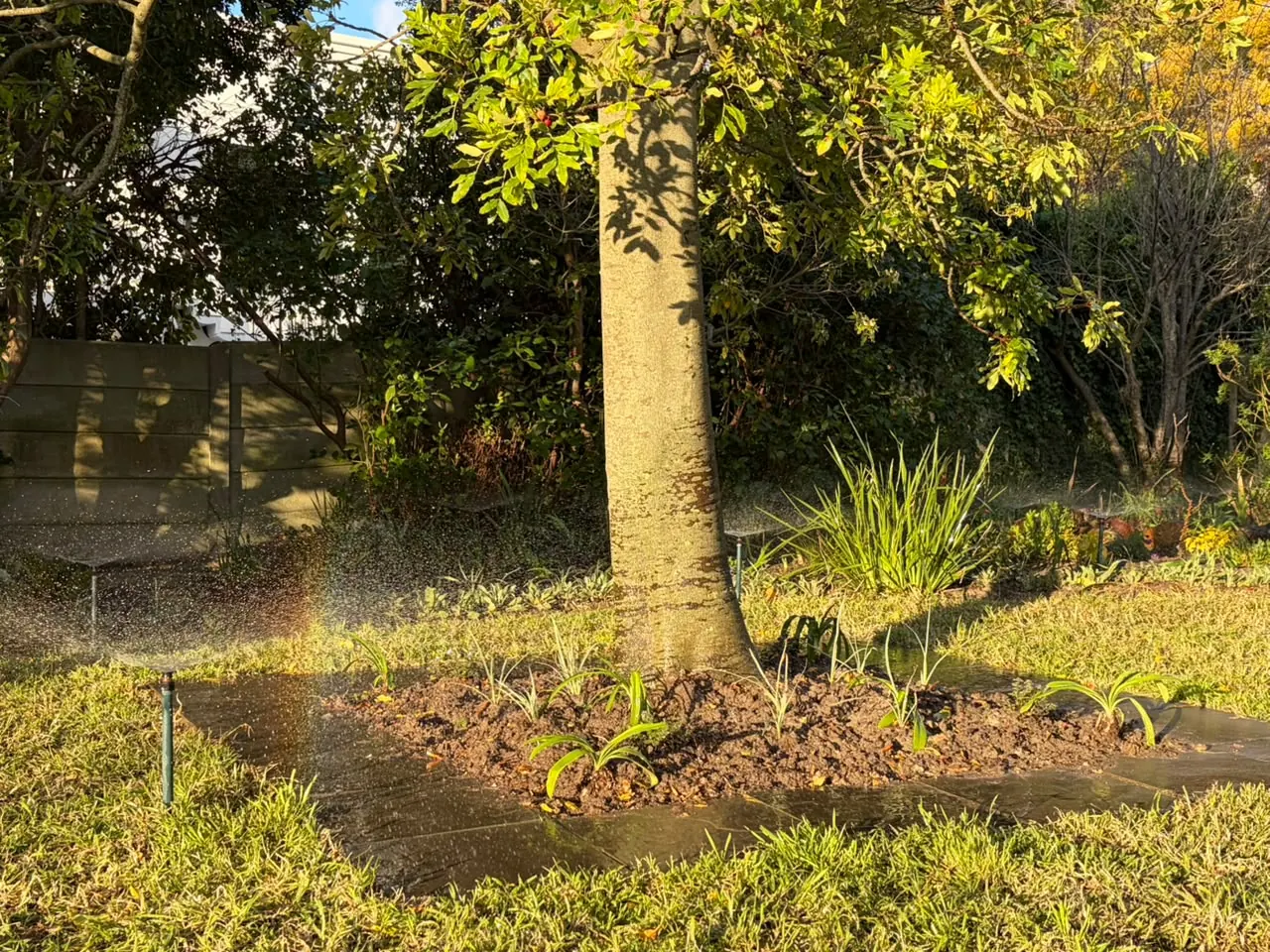
Pop-up sprinklers spray water over an area and are designed to cover lawn evenly.
- Pros: even coverage over large areas, and they're easy to automate.
- Cons: more water is lost to wind and evaporation, and watering in the heat of the day wastes a lot.
- Best for: lawns and large areas of uniform planting.
Sprinklers aren't all the same either. Small pop-up spray heads suit small, tight lawn areas, while rotor heads throw further and suit larger lawns. The important rule is not to mix different head types on the same zone, because they put out water at different rates and you end up with a lawn that's soggy in one patch and brown in another. The spray from each head should also reach the next one, so there are no dry gaps in between.
Wind is the other thing to plan for. The Cape's summer south-easter can carry spray right off the lawn and onto the road, which is why sprinklers should run in the early morning, before the wind picks up. Drip, by contrast, doesn't care what the wind is doing.
| Question | Drip | Sprinkler |
|---|---|---|
| Water efficiency | High | Lower, especially in wind |
| Best area | Beds, trees, hedges | Lawn |
| Maintenance | Check lines now and then | Check heads and spray patterns |
| Fits a water-wise garden | Yes | For lawn areas only |
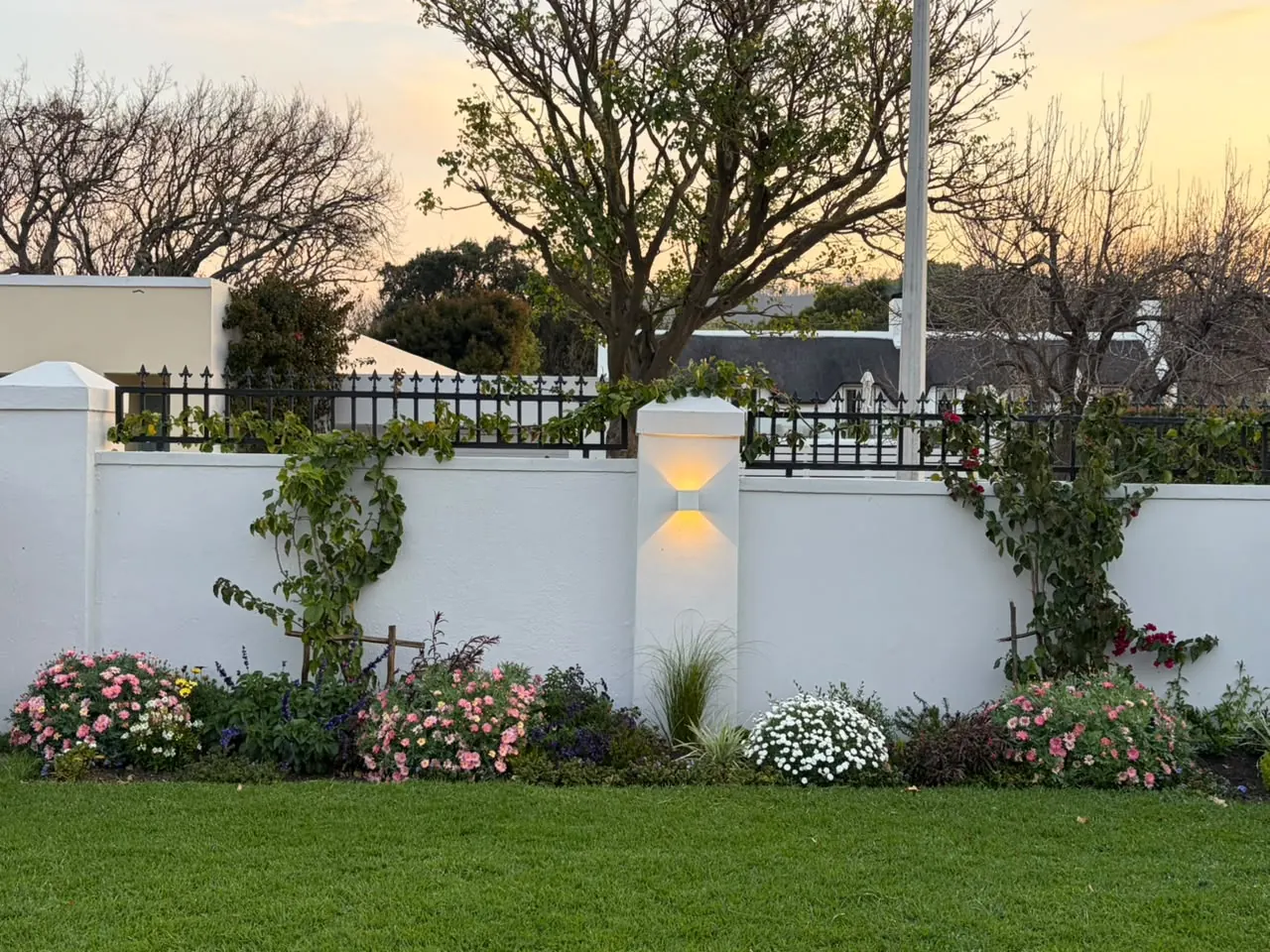
Make either one smarter
- Add a timer or controller so watering happens early in the morning without you.
- Add a rain sensor so the system skips cycles when it has rained.
- Use separate zones for lawn, beds and trees, because they all need different amounts.
- Have the system checked at the start of summer to catch leaks and blocked emitters before the heat arrives.
Water source and pressure
Where your water comes from changes what the system needs. On a municipal supply, the main questions are pressure and flow: can the supply run a whole zone at once, or does it need to be split into smaller zones? If you're drawing from a tank or a borehole, you'll normally need a pump, and a borehole usually needs a filter as well, because fine sand will block drip emitters quickly. Check the local rules on boreholes and water use before you plan around one. If you're considering a rainwater tank as your source, our water-wise garden design guide covers the practical side of collecting winter rain.
Adjust the system through the year
A controller that's set in November and never touched again is a common cause of wasted water. In winter, you can switch the system off or cut it right back, since the rain is doing most of the work. In spring, run each zone, watch it work and fix whatever's wrong, as we cover in our summer-ready garden checklist. In summer, water deeply and early rather than often. In autumn, new plantings will need extra water while they settle, and our planting calendar shows what to plant when.
What about a mix?
Most properties do best with both: drip in the beds, sprinklers on the lawn, all running on one controller with separate zones. This is also one of the water-wise principles we build into every water-wise garden design. If you're redesigning the garden, we'll plan the irrigation at the same time as part of the installation process, so pipes aren't cutting through finished work later.
That last point is worth taking seriously. If you're planning paving, a retaining wall or a new driveway, lay a few empty pipe sleeves under it before it goes down, even if you don't plan to irrigate that area yet. Digging up finished paving to run a pipe later is expensive and messy, and a sleeve costs almost nothing at the time.
On larger properties, such as wine estates and guesthouses, the same mix applies but with more zones, a central controller and often a pump. The planning matters even more because the pipe runs are longer and harder to change, a point we come back to in landscaping for wine estates and guesthouses.
Signs your current system needs attention
If you've already got irrigation installed, a few telltale signs are worth knowing before you call anyone out. Brown or yellow patches in an otherwise green lawn usually mean a blocked or misdirected sprinkler head in that spot, not a watering schedule problem. Plants that wilt despite "enough" watering on the timer often point to a blocked drip emitter starving just that one plant while its neighbours are fine — it's deceptively easy to miss because the rest of the bed looks healthy. And a water bill that's crept up without an obvious reason is frequently a slow leak in an underground line, which can run for months before it shows above ground.
What drives the cost
People often ask for a number before we've seen the garden, and the honest answer is that it depends on a handful of things. The number of zones matters, because each one needs its own valve. The amount of trenching matters, especially if it has to go through lawn, paving or rock. The source matters, since a pump or filter adds to the cost. And the quality of components matters, because cheap fittings are the main reason systems fail early. The more finished the garden is when the system goes in, the more it costs, which is another reason to plan irrigation before planting. Our breakdown of landscaping costs in Stellenbosch and Franschhoek gives more of the wider picture.
Not sure if your current system is actually working for you? We'll assess your property, check what's already installed, and design or repair an irrigation system that fits it properly. Call or WhatsApp 071 719 1285 for a free site visit.
Common Questions
More Guides
 Guide
 Blog