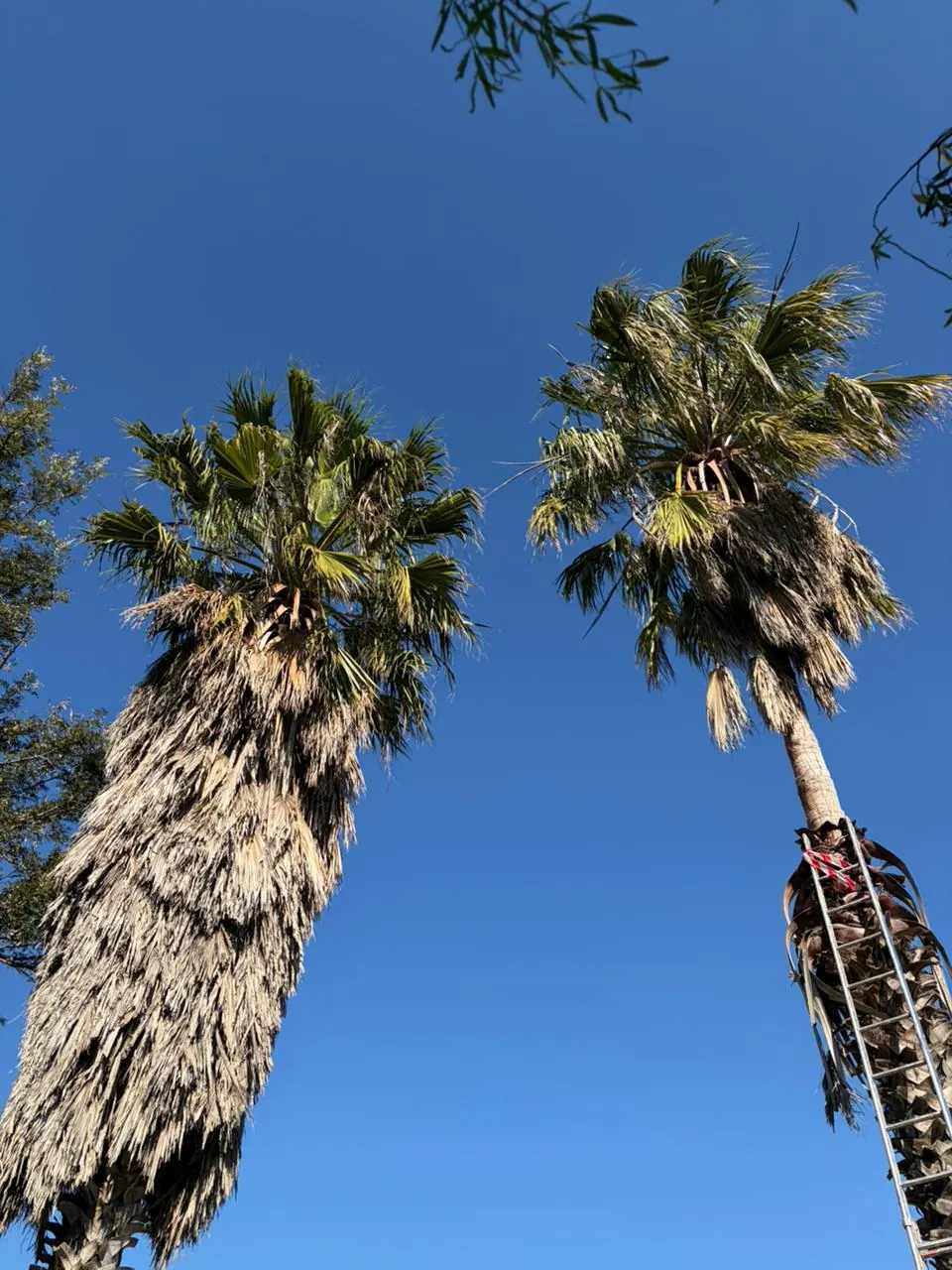
A tree that looks like a problem isn't always one, and this is probably the question we field more anxious phone calls about than any other service we offer. Someone notices a big tree leaning slightly, or dropping more leaves than usual, and jumps straight to "does this need to come down?" Often a good prune solves the issue entirely, and removal is genuinely a last resort — a mature tree takes decades to grow and we'd rather save one than fell it unnecessarily. But sometimes removal really is the safest option, and knowing which situation you're actually in makes a real difference to both the tree's chances and your wallet. Here's how to tell the difference.
How to read a tree before you call anyone
You don't need to be an arborist to spot the early warning signs. Stand back and look at the whole canopy. Dead tips at the top of the tree, or one side that leafs out late or not at all, can point to a problem in the roots or trunk. Look at the base: soil that has heaved or cracked on one side, mushrooms growing from the trunk or roots, and bark that's peeling away in large patches are all worth taking seriously. Look at the forks too. A tight V-shaped join between two stems is weaker than a wide U-shaped one, and it's where large branches most often split in a storm. None of this replaces a professional assessment, but it helps you describe the problem clearly when you call.
When pruning is the answer
- Dead, diseased or damaged branches.
- Branches rubbing together or growing into the centre of the tree.
- Branches overhanging a roof, wall or neighbour.
- A dense canopy that blocks too much light or air.
- Shaping a young tree so it grows with a strong structure.
Good pruning keeps the tree's natural shape. Heavy "topping", which cuts off the top of the tree, weakens it and often causes more problems than it solves.
It also helps to know the terms, because "pruning" covers several different jobs. Deadwooding removes dead branches only. Crown thinning selectively removes some branches to let light and air through. Crown lifting removes lower branches to clear paths, roofs and views. Crown reduction shortens the overall size of the tree by cutting back to suitable side branches, which is quite different from topping, where the leader is simply chopped off. When you ask for a quote, be clear about which of these you actually want.
Before you decide a problem tree has to go, it's also worth asking what else could fix it. A stressed tree can sometimes recover with a well-judged prune, better watering during dry spells, and a fresh layer of mulch kept clear of the trunk. A tree that's too big for its space can often be reduced rather than removed. Removal should be the answer when the tree can't be made safe, not simply when it's inconvenient.
When removal is the answer
- The tree is dead or in serious decline.
- The trunk or main roots are badly damaged or rotten.
- The tree is leaning dangerously, especially towards a building.
- Roots are damaging foundations, paving, pipes or walls.
- It's an invasive alien species taking over the property.
Roots, foundations and choosing the right tree in the first place
A large share of the removal calls we get are really planting mistakes made years ago. A big, vigorous tree planted too close to a house, a swimming pool or a drain will eventually cause trouble, because the roots follow water and the path of least resistance. If you're planting a new tree, check the mature size and root habit before you buy, and give it plenty of room. Our indigenous plants guide lists some good structural trees, such as wild olive and karee, that suit Winelands gardens. If you're planning paving, irrigation or a retaining wall near a mature tree, work out where the main roots run first. A gabion wall, for instance, can be positioned or stepped to avoid the worst of the root zone.
Alien invasive trees
Some of the trees that most need removing aren't ones people planted on purpose. Species such as Port Jackson willow and black wattle spread aggressively, shade out indigenous plants, use a lot of water and add to fire risk. In South Africa, landowners have legal responsibilities regarding listed invasive species, so it's worth checking which ones apply to your property. Removing them properly means dealing with the stump and regrowth as well, otherwise they'll simply resprout, and replacing them with suitable indigenous trees keeps the problem from coming back.
Check the rules first
Some indigenous trees are legally protected in South Africa, and removing or even heavily cutting them may need a permit. Milkwood is one example. Your municipality may also have rules for trees in certain areas. A professional can advise you on this before any work starts.
Why it's not a DIY job
Tree work is consistently ranked as one of the most dangerous jobs in gardening, and not by a small margin. Falling branches, working at height on a ladder, chainsaws, and the possibility of power lines hidden in the canopy are a genuinely risky combination, and that's before you factor in a tree that's already structurally compromised — exactly the kind people attempt to deal with themselves because calling a professional feels like overkill for "just one branch." A professional team has the equipment and training to assess the tree properly before cutting anything, and to rig it so branches come down where intended rather than through a roof or fence.
Warning signs worth acting on between scheduled visits
You don't need to inspect your trees constantly, but a few signs are worth a call sooner rather than later: sudden leaning that wasn't there before, especially after wind or heavy rain; large cracks appearing in the trunk or at a major branch join; fungal growth at the base of the trunk, which often signals root decay you can't see; and a sudden, large amount of leaf drop outside the normal season. None of these automatically mean removal, but all of them are worth a professional opinion before the next storm, not after.
After a storm
Winter cold fronts can bring strong wind to the Winelands, and the days afterwards are when most tree problems show up. Walk around and look for broken or hanging branches, cracks at major forks and any leaning that wasn't there before. Keep well clear of anything that looks unstable, and treat any branch touching a power line as dangerous. Don't go anywhere near it, and call the relevant authority. If you manage a large property with many mature trees, such as an estate or guesthouse, a regular inspection before winter is cheap insurance, and it's part of the wider upkeep we describe in landscaping for wine estates and guesthouses.
Questions to ask any tree service
- Do you carry insurance?
- Will you remove all the cuttings and waste?
- Do you grind or remove the stump, or is that extra?
- Are any of my trees protected?
The price depends on how big the tree is, how accessible it is, how much has to be cut and carted away, and whether the stump is included, which is why a reliable quote needs a site visit. Our guide to landscaping costs in Stellenbosch and Franschhoek explains how we approach pricing more broadly.
After the tree is gone: stumps and replacements
A felled tree leaves a stump, and you have three options: grind it below ground level, remove it completely, or leave it. Grinding is the most common choice because it clears the way for lawn or planting, but some species send up suckers from the roots, so the stump may need treating as well. Once the ground is clear, think about what to plant in its place. Winter is the best time to put in a new tree, as we explain in our month-by-month planting guide, and a well-chosen replacement can be a much better fit for the space than the original ever was.
The best time for tree work
Dead branches can be removed any time — they're not going to get more dead by waiting for the "right" season. For most shaping and pruning, winter dormancy is a good time, when the tree isn't actively growing and the structure is easier to see without a full canopy of leaves. Avoid heavy pruning in the heat of summer, since it exposes the tree to sun stress right when it's already under the most strain — it's one of the checks we recommend in our summer-ready garden checklist, well before the dry season sets in.
Got a tree you're not sure about? We'll look at it in person and give you honest advice — pruning if that's genuinely all it needs — as part of our tree services. See more in our tree removal FAQ, or call or WhatsApp 071 719 1285 for a free site visit.
Common Questions
More Guides
 Guide
 Blog