
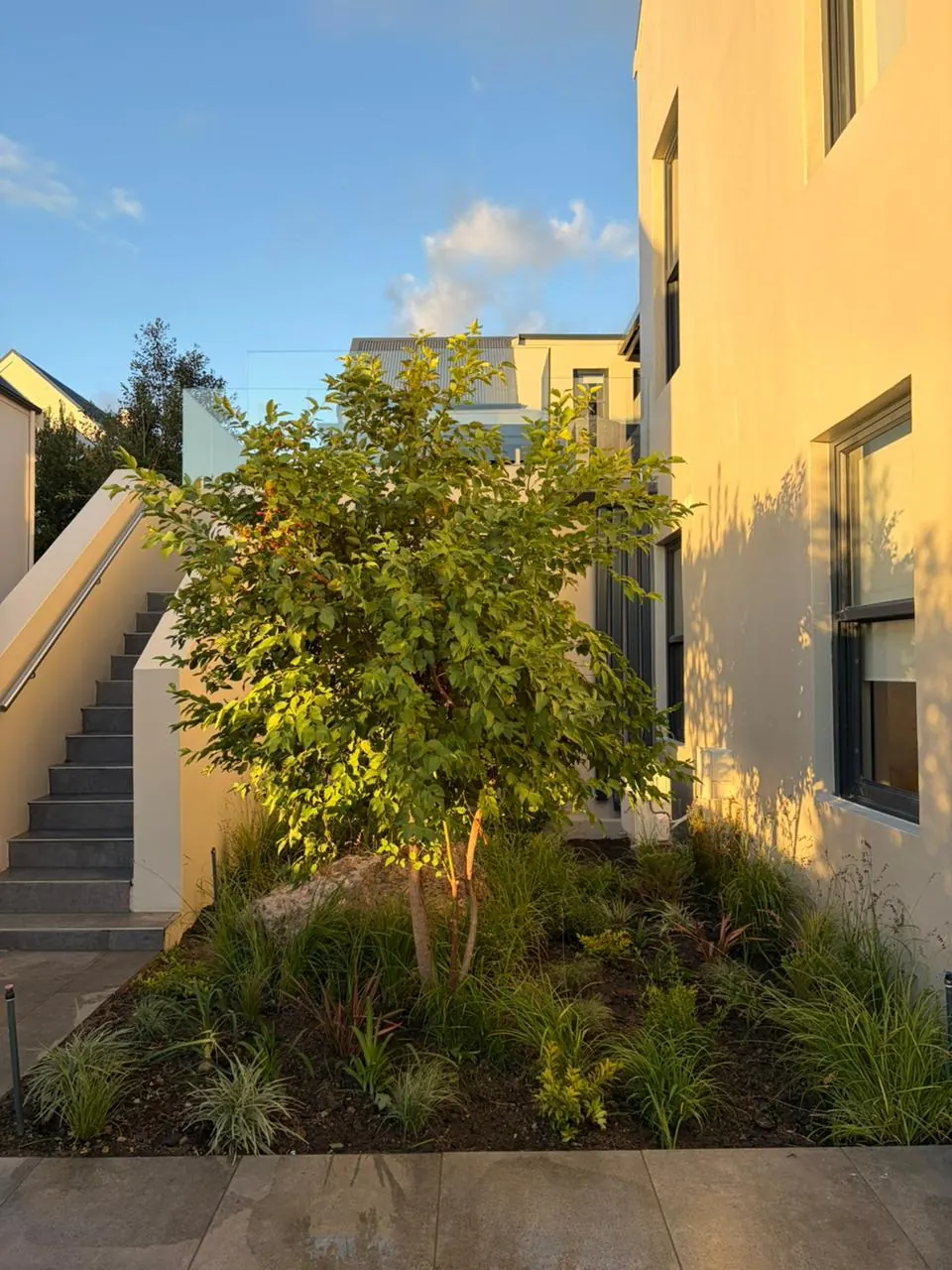
Hiring a landscaper for the first time can feel like a bit of a leap of faith — you're letting a team you've only just met dig up your garden, trusting a plan you've seen on paper to actually look right once it's in the ground. Knowing how the process works, step by step, makes that leap a lot smaller. Here's what actually happens, from your first call to the day we pack up and hand the garden over.
Before we start
- Site visit. We arrange a free visit within 48 hours of your call. We look at your space, soil, light and access, and talk through what you want.
- Written quote. You get a clear quote shortly after, with the scope, materials and timeline — see our guide to landscaping costs for what drives the price.
- Plan and plants. Once you approve, we confirm the plant palette, order materials and agree a start date.
What gets decided before anything is dug
Most of what makes an installation go smoothly happens before the first spade goes in. Together we agree the scope, the layout and the plant palette, and we look at where water, power and access are. We also look for anything underground, such as pipes and cables, which is easy to hit and expensive to fix. If you're after a plant palette that suits the Winelands, our guide to indigenous plants shows the kinds of species we draw on, and our water-wise design principles shape how the beds are laid out and watered. Spending an hour on this stage saves days later.
A typical small installation, day by day
Every job is different, but a small garden installation usually follows this pattern.
| Day | What happens |
|---|---|
| Day 1 | Site preparation. We clear the area, mark out the design, and deal with levels and drainage. Soil is improved with compost where needed. |
| Day 2 | Structure. Irrigation lines, edging, paths or hard features go in first, before any planting. |
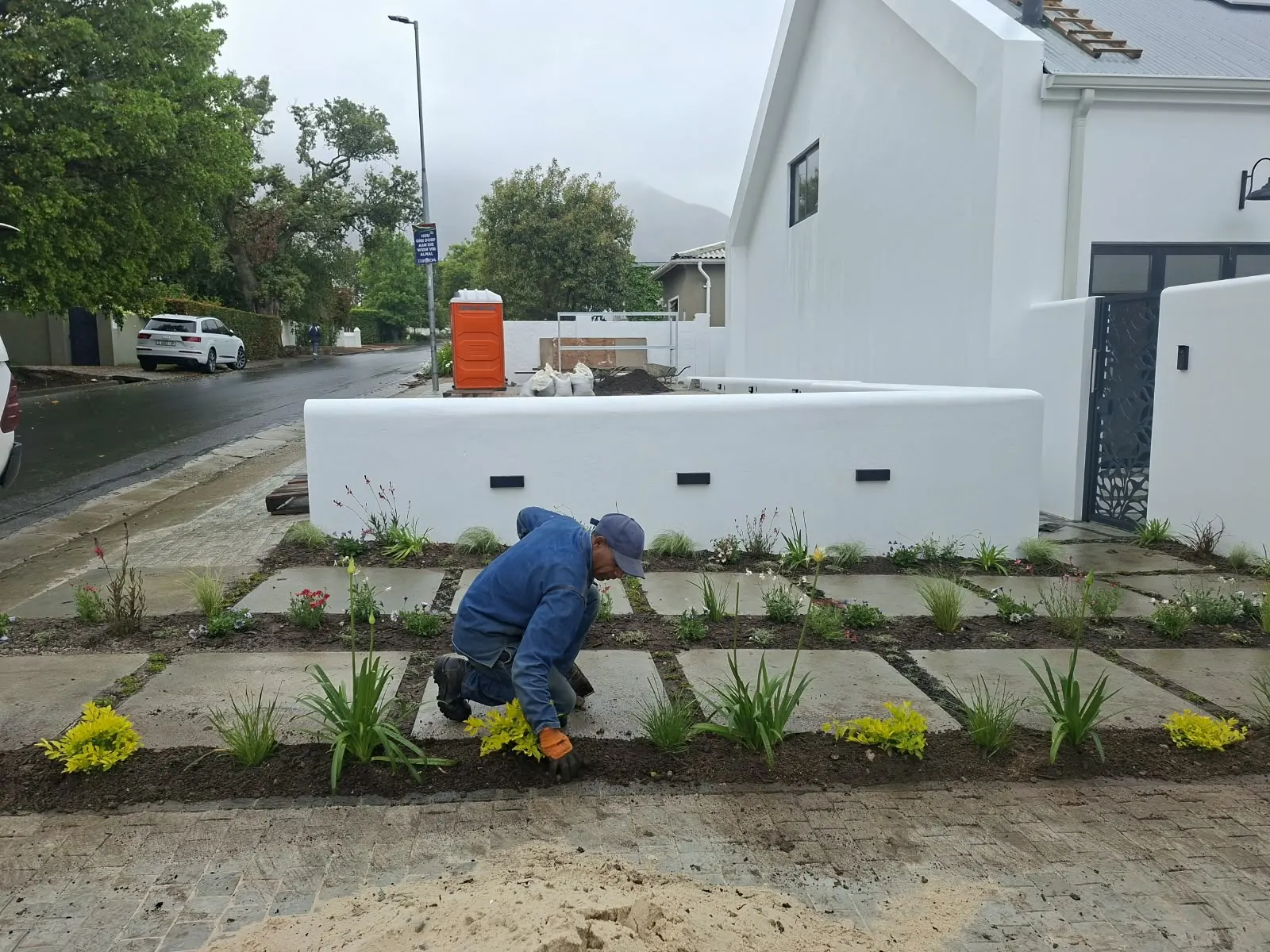
| Day 3 | Planting. Trees and larger plants first, then shrubs, grasses and ground covers, placed according to the plan. |
| Day 4 to 5 | Finishing. Mulching, final watering, lighting if included, and a thorough clean-up. We walk you through the garden and explain how to care for it. |
What happens in each phase
Preparation. The area is cleared, the levels are set and the drainage is sorted out, because water that sits in a bed will kill plants however well they're chosen. Where the soil is poor, it's improved with compost and organic matter. If a tree is in the way or needs work first, we deal with that before anything else, and our guide to tree removal vs pruning explains how those decisions are made.
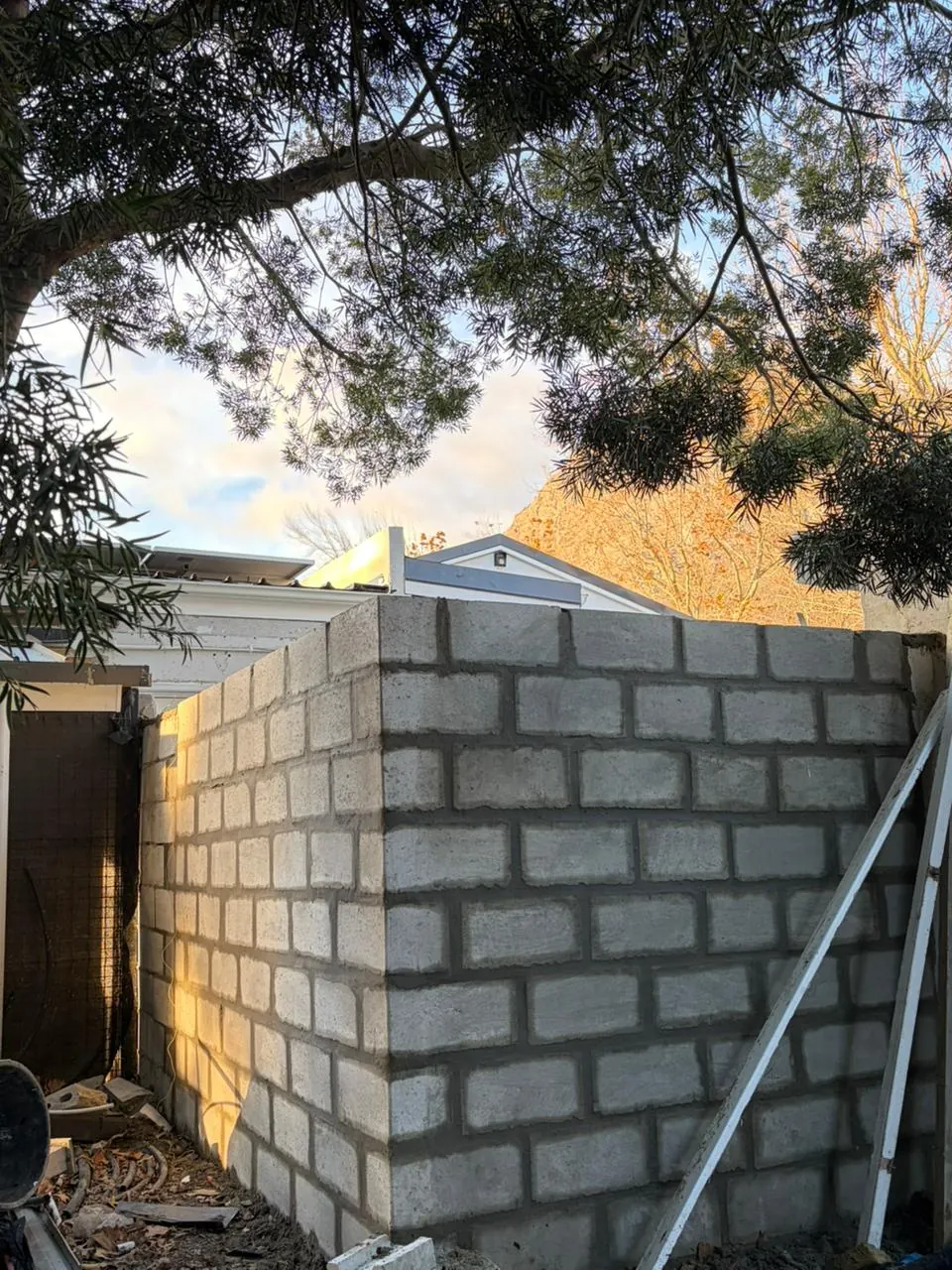
Structure. Hard features go in before the plants. That includes edging, paths, steps, retaining walls and irrigation lines, which are laid in trenches and tested before they're covered. If a wall is part of the design, such as a gabion wall, it's built at this stage. It's also when pipe sleeves are placed under paving, so irrigation can be extended later without digging up finished work. The right system depends on what's being watered, and drip vs sprinkler irrigation explains how we choose.
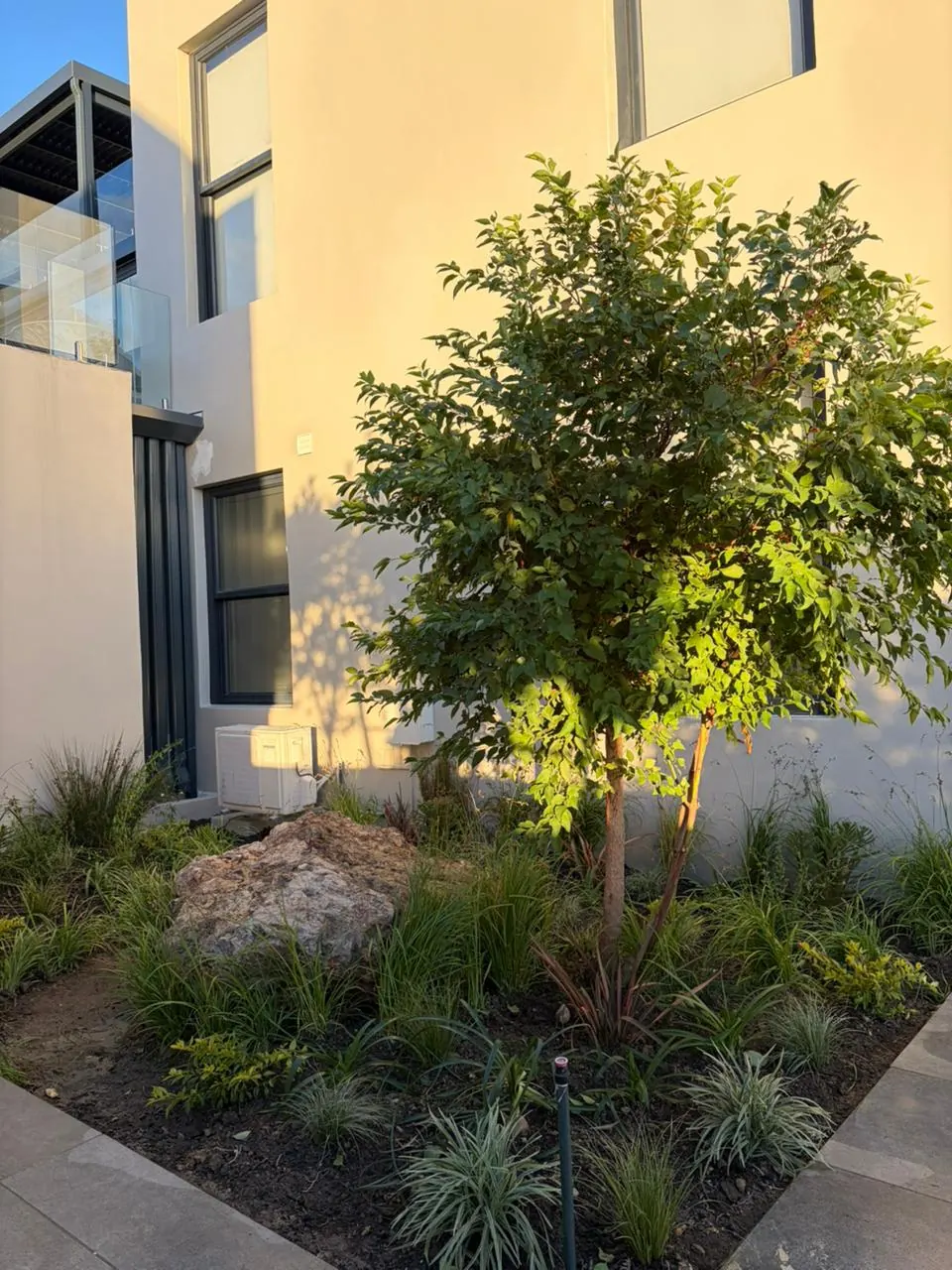
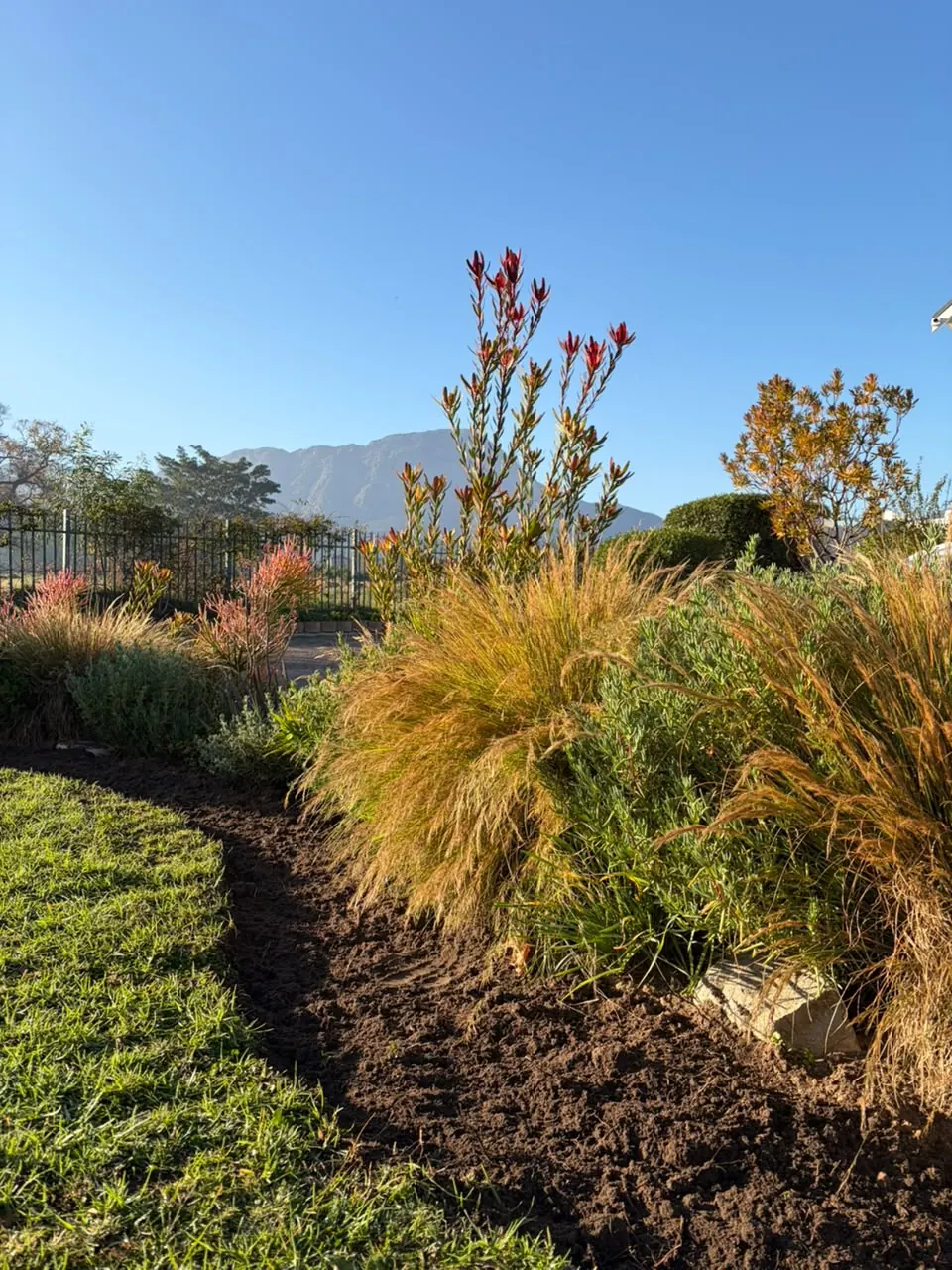
Planting. Trees and larger shrubs go in first, then smaller shrubs, grasses and ground covers. We place each plant with its mature size in mind, not its size on the day, so the garden looks full but isn't overcrowded in three years. Every plant is watered in thoroughly as it goes in.
Finishing. Beds are mulched, the irrigation is run and adjusted, any lighting is set up and the site is cleaned. We then walk you around the garden, explain what's where and show you how the system works, so you know exactly how to look after it.
What you need to do
- Make sure we can get access to the area on the agreed days.
- Move any furniture, pots or personal items out of the way.
- Tell us about pets, children and any hidden pipes or cables you know about.
- Be available for questions. We might need a decision on the day.
What about bigger jobs?
Larger estate projects can run for two to six weeks, depending on size and the amount of hardscaping involved. We give you a realistic timeline in the quote and keep you updated as the work progresses, rather than going quiet until it's suddenly finished. The irrigation design — whether drip, sprinkler, or both — is planned alongside the hard structure so nothing cuts through finished work later, which is one of the most common and most avoidable mistakes we see on gardens that weren't planned properly from the start.
Bigger projects, such as estates and guesthouses, are usually split into phases so the property can keep operating. We start with the most visible areas and work outwards, and we look at how that works in landscaping for wine estates and guesthouses.
What it's like having a crew on site
A garden installation is noisy and a bit messy, particularly on the structural days. Expect trenching, material deliveries and some dust. We need access to water and, for some jobs, power, and we try to protect any existing plants, paving and lawn that are staying. It helps to let neighbours know a team will be working, and to keep pets and children out of the work area. If anything on site needs a decision, such as an unexpected rock or a pipe nobody knew about, we'll talk it through with you rather than guessing.
What if the weather doesn't cooperate?
The Western Cape's winter rain is exactly what new plantings want, but it can also slow down site work — wet soil is harder to shape and compact properly, and heavy rain isn't ideal for laying irrigation lines. If weather pushes a day or two, we communicate that early rather than letting you wonder why nobody showed up, and we build a reasonable buffer into larger project timelines for exactly this reason. It rarely turns a five-day job into two weeks, but it's worth knowing it's a factor we plan around rather than ignore.
What if I want to change something mid-install?
It happens more often than you'd think — someone sees the structure going in and realises they want the path a metre to the left, or decides on a different feature tree once they see the space cleared. Minor changes are usually absorbed without fuss. Anything that meaningfully changes materials, plants or labour gets priced as a short variation and confirmed with you before we proceed, the same principle covered in our guide to landscaping costs — so you're never surprised by a different total on the final invoice.
After we finish
The first few months are when a new garden settles in, and watering matters more than anything else during that window — more than feeding, more than anything you might be tempted to do to "help" the garden along. We explain exactly what schedule to follow, and if you're unsure how the plants are settling in, we're a phone call away. If you'd like us to look after the garden long term rather than handing it to someone else once it's planted, we offer maintenance contracts with no obligation to commit beyond the install itself.
Questions worth asking before you sign anything
Whoever you hire, it's worth asking a few things up front. Who will be on site each day, and who is your point of contact? What exactly is included in the quote, and what isn't? How are changes priced? What happens about waste removal and clean-up? How will the plants be watered and cared for in the first weeks? A reliable contractor will answer all of these clearly, and asking for the same itemised scope from each contractor is the fairest way to compare quotes.
The first 90 days
In the first few weeks, new plants need regular watering while their roots grow into the surrounding soil. As a rule of thumb, that means watering frequently at first and then tapering to deeper, less frequent watering as the plants settle. Holding off on feeding for the first few weeks also helps, since the plants are putting their energy into roots. Check the irrigation regularly in this period and look at the plants themselves. Leaf drop or wilting on one plant often points to a blocked emitter or a poor planting position rather than a problem with the whole garden. Our seasonal care checklist then covers the routine jobs from the first spring onwards.
Timing your installation also matters a great deal for how easily the garden establishes — see our month-by-month planting guide for the best season to start.
Ready to see your garden through from first visit to finished planting? Free site visit and written quote within 48 hours, as part of our landscaping design service. Browse completed installations or see more in our projects FAQ. Call or WhatsApp 071 719 1285.
Common Questions
More Blogs
 Blog
 Guide