
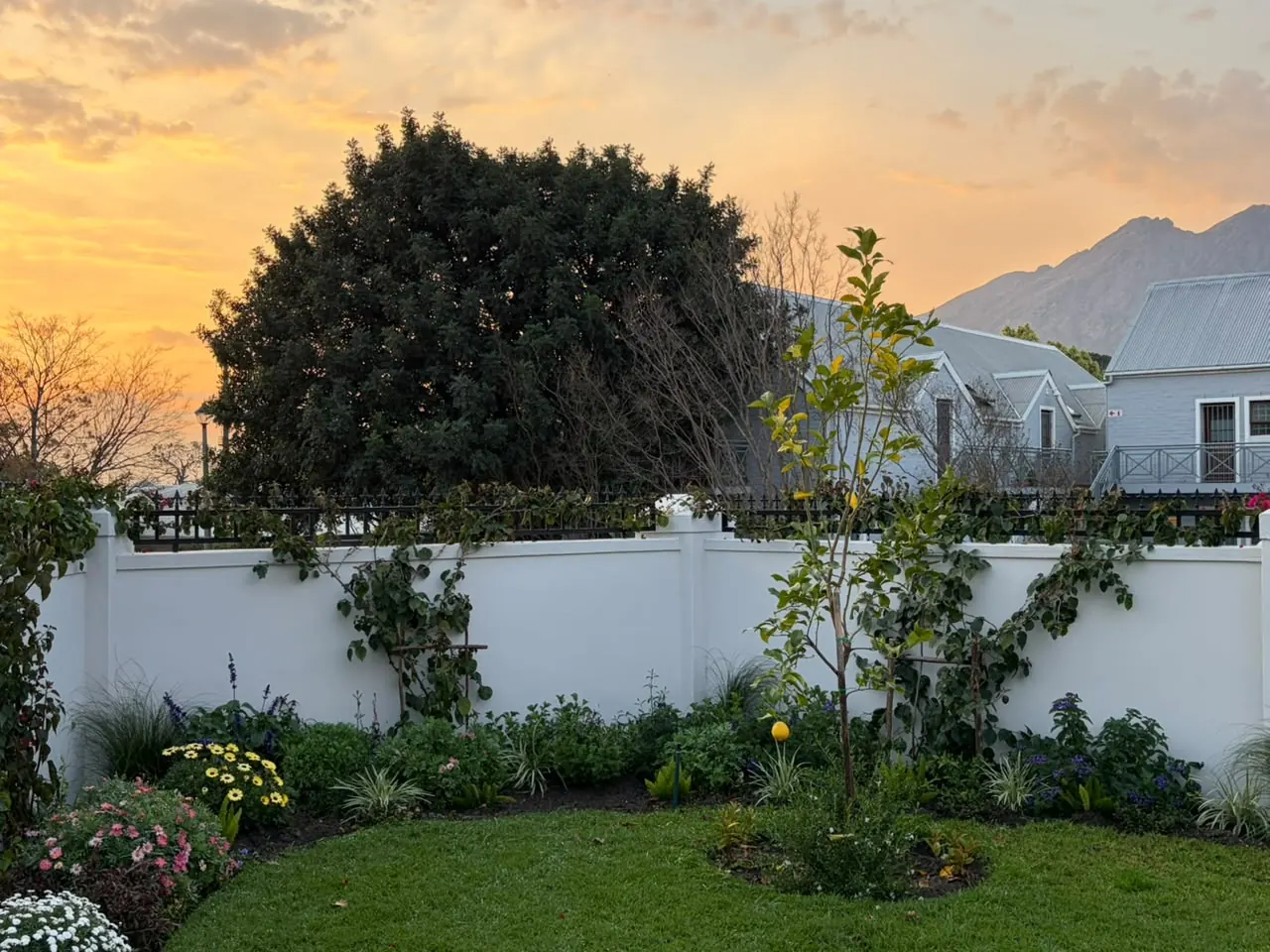
For a wine estate, guesthouse or restaurant, the garden isn't decoration — it's part of the product, the same way the wine, the menu or the room finishes are. Guests judge a property from the moment they turn in at the gate, long before they've tasted anything or checked into a room. A well-kept entrance, a pleasant courtyard or a tidy tasting room terrace says a great deal about the standard of everything else on the property, and a neglected one undoes a lot of good work happening elsewhere.
We've worked on grounds that host everything from quiet midweek tastings to full wedding seasons, and the brief is always a version of the same thing: make it look effortless, year-round, without needing a full-time gardener babysitting it every day.
1. Start with the arrival
The entrance, driveway and parking area are the first thing guests see and the last thing they remember. Clean lines, healthy planting and good lighting here have the biggest effect for the money.
Think about the whole sequence from the gate to the front door. A planted verge or a line of well-chosen trees along the drive builds anticipation, signage should be easy to read without dominating, and parking works best when it's screened from the main view with planting or a low wall. A gabion wall is a popular choice for screening parking or holding back a bank, because it looks at home in a rural setting rather than industrial. Light the route so guests arriving at dusk feel welcomed, not lost.
2. Design for the view and the setting
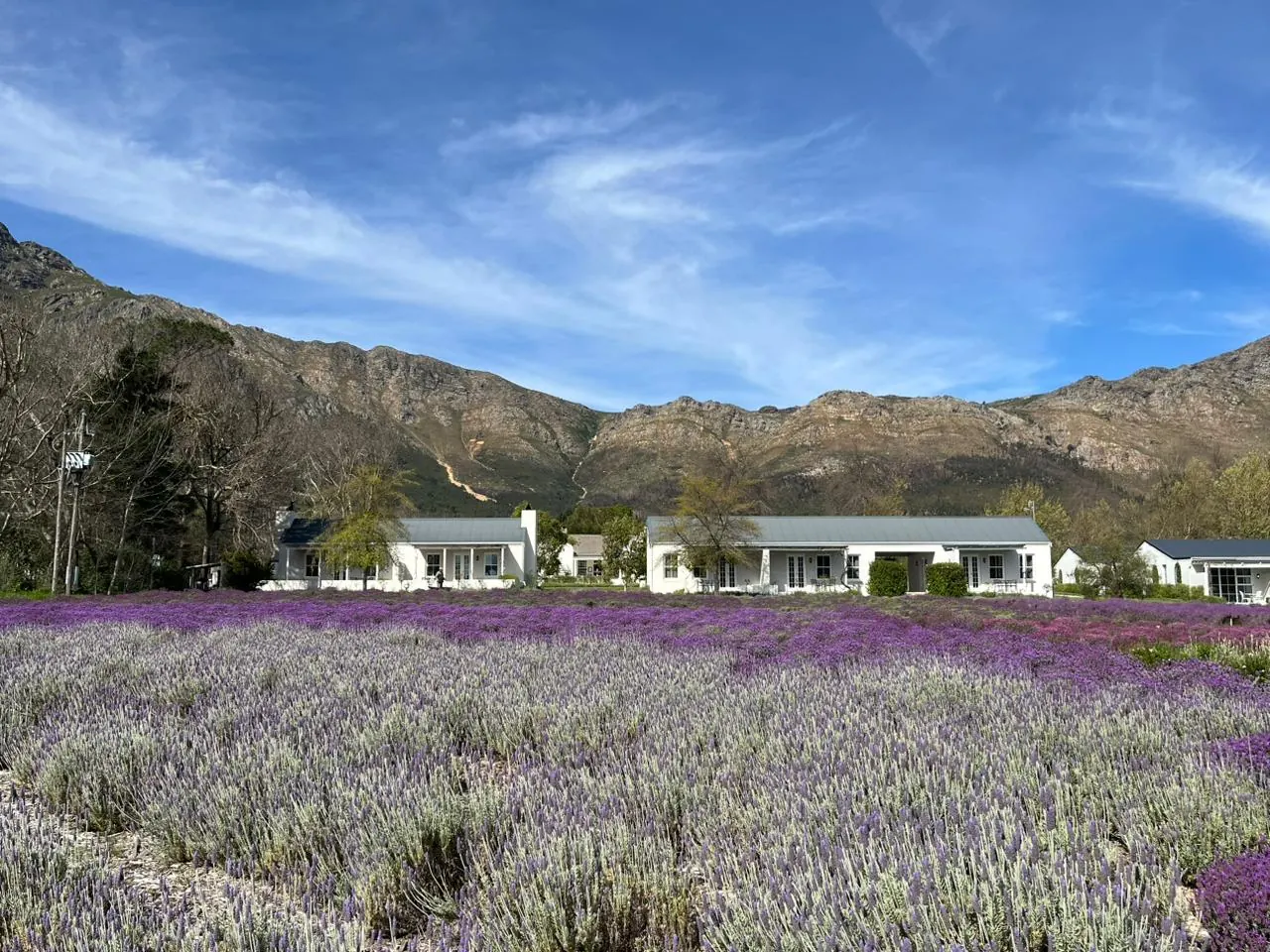
Winelands properties have mountains, vineyards and open skies. Good landscaping frames these views instead of competing with them. Indigenous and Mediterranean-style planting suits the setting and avoids a garden that looks out of place. Our guide to indigenous plants covers the species we reach for most, including restios, wild olive and wild garlic, which sit comfortably against vineyards and mountains. Keep planting low in front of key views and put height and structure at the edges, so the garden frames the scene rather than blocking it.
3. Make it work in every season
Guests visit all year round. A garden that only looks good in spring is a missed opportunity. We combine evergreen structure with seasonal colour so the property looks good in January and in July — the same thinking behind our seasonal garden checklist. In practice that means evergreen and indigenous structure as the backbone, with spring bulbs and annuals, summer perennials and autumn colour layered over the top. Most of that planting goes in during autumn and early winter, and our month-by-month planting guide shows what goes in when.
4. Plan for low-maintenance, not no-maintenance
A busy estate doesn't have time for fiddly gardens. Choose hardy plants, install efficient irrigation and set up a regular maintenance schedule. Consistent upkeep matters more than any single design feature — this is also the core idea behind water-wise garden design. On larger properties, the biggest savings come from irrigation. Splitting the grounds into zones, with drip irrigation in beds and sprinklers only where there's lawn, on a central controller, keeps water use predictable. Shrinking the lawn to the areas that are actually used, and mulching every bed, takes a lot of work out of the weekly routine.
5. Think about fire and safety
The Winelands has a real fire season. Keep dense, flammable planting and dead material away from buildings, keep trees pruned back from roofs, and keep access routes clear. A well-irrigated lawn or paved area makes a useful buffer between buildings and denser planting, and clearing leaf litter and dead material before summer is one of the cheapest precautions available. Trees overhanging roofs or close to buildings should be checked and pruned, and our guide to tree removal vs pruning explains how to tell what each tree needs. Make sure vehicles, including emergency vehicles, can get through gates and along driveways without being blocked by overgrown planting.
6. Light the evenings
Many guests will use your outdoor spaces after dark. Subtle garden lighting along paths, around trees and on feature walls makes a property feel considered and safe. Warm white light looks more inviting than harsh cool white, and the aim is to light the garden rather than the guest, so fittings should be shielded to avoid glare. Low-voltage systems on a timer are simple to run, and planning cable routes before planting avoids digging up finished beds later.
7. Add a water feature
The sound and look of water makes a courtyard or a quiet corner feel calm. A well-placed fountain or pond is often what guests photograph and remember, and what turns up in the wedding and event photos that circulate long after the day is over. Practicalities matter as much as looks, though. A recirculating pump keeps water use low, the design needs to be safe around children, and the feature needs regular cleaning and a bit of attention to keep the water clear and the pump working. If you'd like to see what's possible, our water features service covers the options.
8. Get the walkways and surfaces right
Guests arrive in all kinds of footwear and some need step-free access. Paths should be level, firm and non-slip when wet, with gentle gradients and good drainage so they don't pond after rain. Gravel looks lovely but is difficult for wheelchairs, prams and heels, so many properties use paving for main routes and keep gravel for secondary paths. Steps need clear edges and good lighting, and the choice of paving and retaining walls affects both the look and the budget, which we discuss in our guide to landscaping costs in Stellenbosch and Franschhoek.
9. Design with events in mind, even if you're not primarily an event venue
Even properties that don't market themselves as wedding or event venues often end up hosting one eventually — a private function, a product launch, a photoshoot a wine brand wants to use. Lawns that can take a marquee without turning to mud, sightlines that frame a ceremony spot, and power and water access worked into the original design all save a scramble later. It costs very little to plan for this upfront and a great deal more to retrofit once the garden is established.
Phasing the work around a trading property
You can't close a guesthouse for a month while the garden is rebuilt, so installation work has to fit around guests. The usual approach is to split the property into areas and work through them one at a time, starting with the arrival and the most visible spaces. Noisy or messy work such as paving and walls is best scheduled for your quietest months, and planting can then follow in autumn. If you'd like to see what each stage involves, our guide to how a garden installation works walks through it.
Maintenance that fits the way you operate
On a trading property, the best maintenance is the kind guests never notice. Regular visits on a set schedule keep lawns, beds and paths looking sharp, with an extra tidy before big events or busy weekends, and seasonal jobs such as mulching, pruning and irrigation checks done at the right time rather than after something goes wrong. We offer this as part of our garden maintenance service, and it's why we tend to agree a schedule at the start. Consistent upkeep is cheaper than a big recovery project every few years.
What to ask before you hire anyone
For a property that's open to guests, a few questions are worth asking any landscaper up front. Can they work around your operating hours and busy periods? Will they phase the work so the property stays presentable? Can they show you completed projects of a similar scale? Who will actually be on site day to day, and who do you call if something goes wrong on a Friday afternoon before a wedding? A clear, itemised quote and a realistic timeline matter even more at this scale, because the cost of a delay is higher when guests are involved.
Why a single provider helps
When the same team designs, installs and maintains your grounds, nothing falls between the cracks. They know your irrigation system without needing a walkthrough, they know which beds struggle in late summer and why, and they know your plants well enough to spot a problem while it's still small instead of discovering it dead three weeks later. Splitting design, installation and maintenance across different contractors is common, but it means every new person starts from zero — and on a working estate, that knowledge gap is exactly where things get missed right before a busy weekend.
Running a property that guests judge the moment they arrive? We design, install and maintain grounds for estates, guesthouses and commercial properties — see our full range of services or browse completed projects. Call or WhatsApp 071 719 1285 for a free site visit.
Common Questions
More Blogs
 Blog
 Guide