
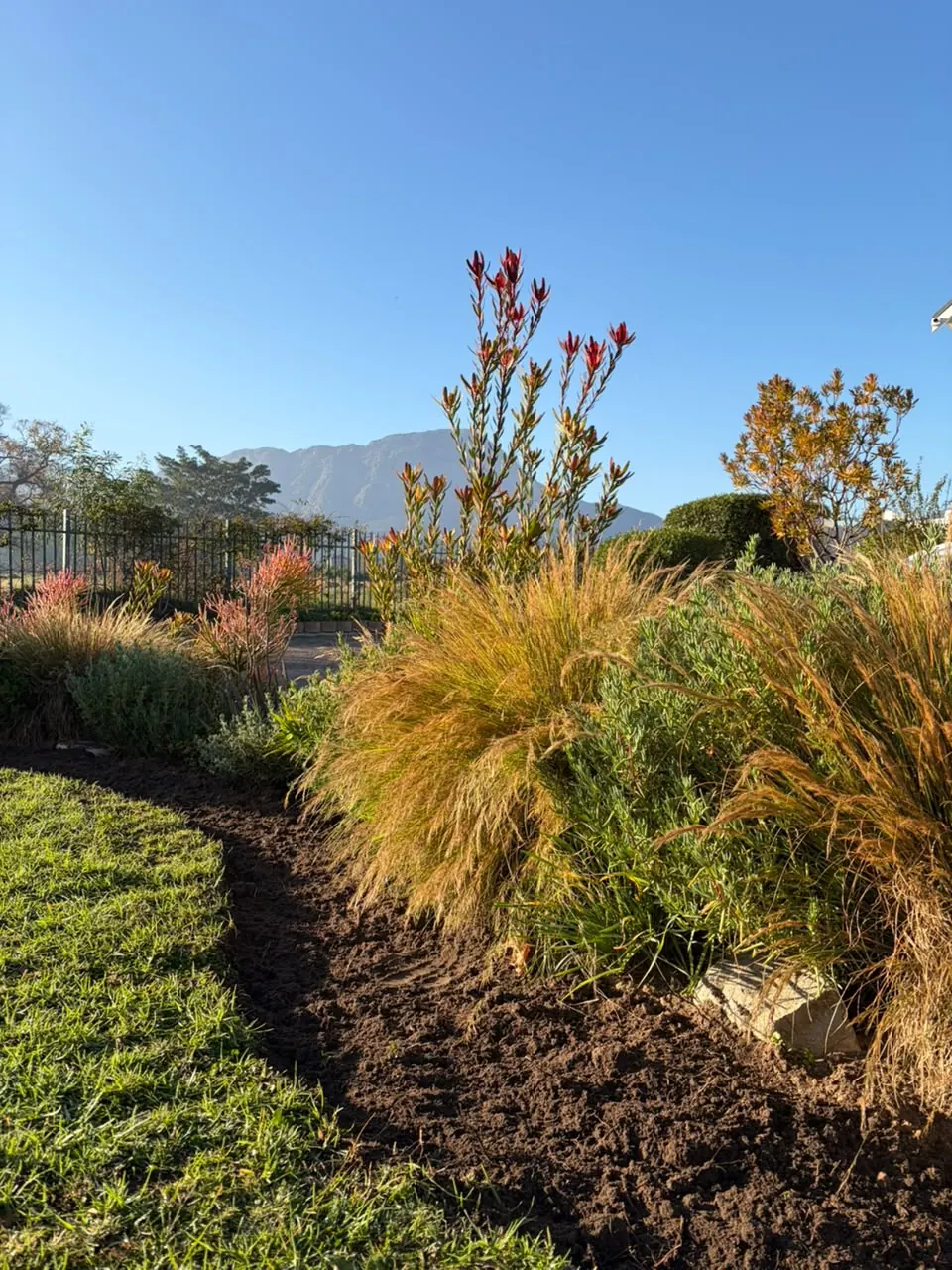
We get calls almost every week from people who planted something beautiful in December, watched it struggle all summer, and want to know what went wrong. Nine times out of ten the plant itself wasn't the problem — the timing was. In the Western Cape, timing matters more than almost anywhere else we've worked. Plant at the right time and nature does half the work for you, for free. Plant in the wrong month and you'll spend the whole summer hand-watering something that's fighting for its life.
The general rule: plant in autumn and early winter, so roots establish while the soil is cool and the rain is falling. Everything below builds on that one idea.
| Months | What to do |
|---|---|
| January to February | Hottest and driest. Water deeply, mulch, and avoid planting. Good time to plan next season's changes. |
| March to April | Temperatures ease. Start planting shrubs, perennials, indigenous plants and groundcovers. Divide and replant overgrown clumps. |
| May to June | The best planting window. Plant trees, shrubs, fynbos and winter-flowering annuals such as pansies, violas and stocks. |
| July to August | Cold and wet. Prune roses, cut back and tidy, and plant bare-root roses and fruit trees. Avoid working heavy, waterlogged soil. |
| September to October | Spring growth. Feed lawns and beds, plant summer annuals and perennials, and install or service irrigation. |
| November to December | Heat builds. Mulch, water deeply and early, and keep new plantings well watered. |
Why autumn is best
Autumn soil is still warm from summer, which encourages root growth, while the air above ground is cooler, so the plant loses far less water through its leaves while those roots get established. Winter rain then does much of the watering for you, for free, for months. A tree or shrub planted in May goes into its first summer with a root system that's had six months to spread out and anchor itself. The exact same plant, put into the ground in January, is trying to grow roots and survive 30-degree heat at the same time — and usually loses that fight, or limps along stunted for a year or two even if it technically survives.
Microclimates matter more than the calendar
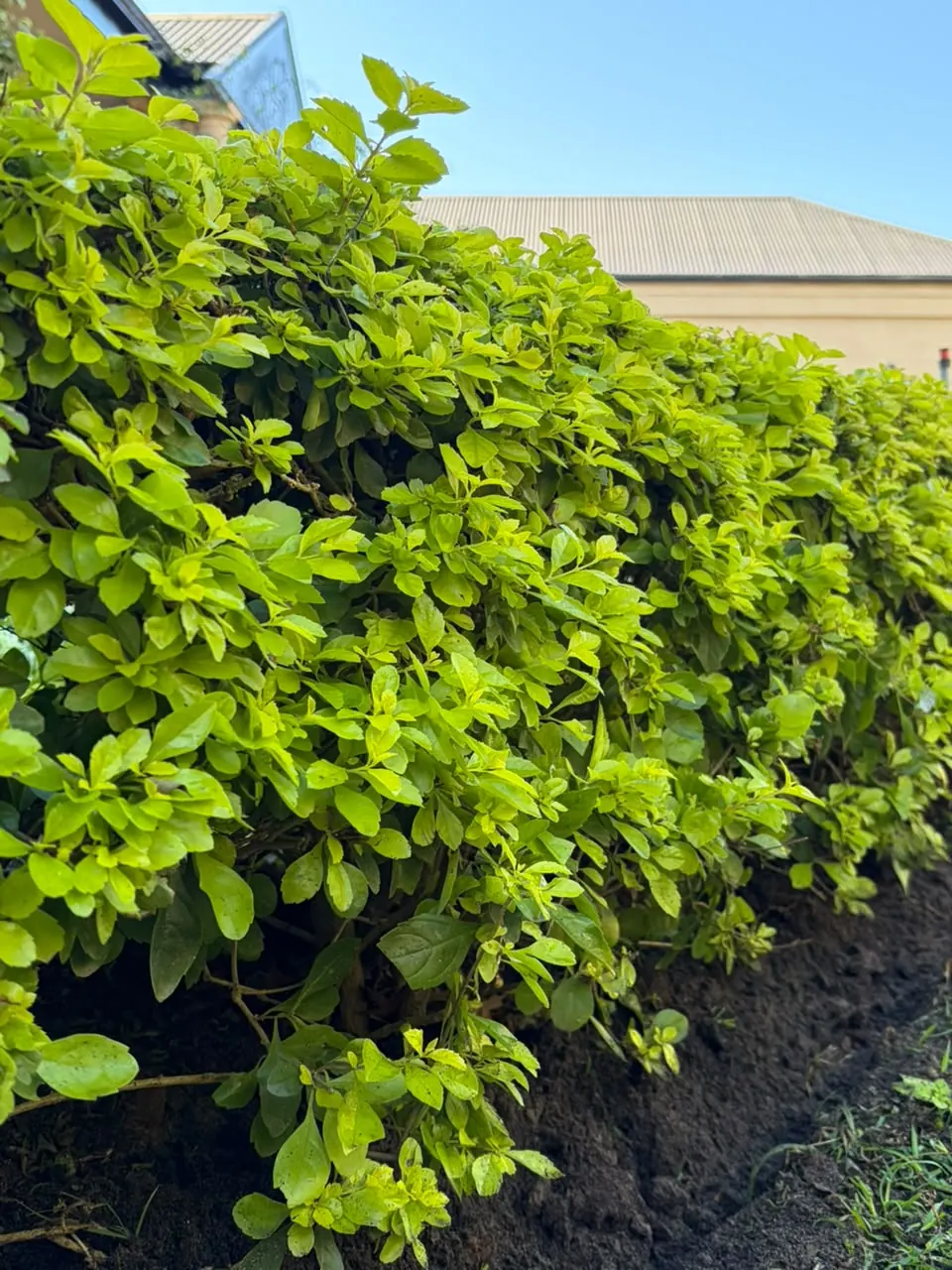
This table is a Western Cape-wide guide, but the Winelands isn't one climate — it's several, often within a twenty-minute drive of each other. Higher-altitude pockets of Franschhoek can get frost that never touches the Paarl valley floor a few kilometres away. South-facing slopes hold moisture and stay cooler for longer into spring; north-facing ones dry out and warm up faster. A walled courtyard garden in central Stellenbosch can run several degrees warmer than an exposed property on the edge of town. None of this means the table above is wrong — it means treat it as a starting point and adjust a few weeks either way based on what you actually see happening on your own property, or ask whoever's managing the planting to factor it in.
Autumn, March to May: the main event
This is when most of the planting happens. Start with the trees and larger shrubs, since they need the longest to settle, then move on to perennials, indigenous plants and ground covers. Loosen the soil well before planting, but go easy on rich fertiliser, which pushes soft top growth at the expense of roots. Early autumn can still be dry, and the first real rain doesn't always arrive on schedule, so keep watering new plants until the rains have properly set in. If you're planting indigenous species, our indigenous plants guide covers what suits which spot.
Winter, June to August: pruning and bare-root planting
Dormant plants can be moved and pruned with far less stress, which makes winter the time for roses, deciduous fruit trees and bare-root stock. Prune roses in July or August, cut out dead and crossing wood, and plant any new bare-root roses and fruit trees while they're leafless. Don't work heavy clay while it's waterlogged, because walking on it compacts the soil and undoes a lot of good preparation. Winter is also the best time to line up tree work, and our guide to tree removal vs pruning explains how to tell which one a tree needs.
Spring, September to October: feed, plant and check the system
As temperatures climb, feed lawns and beds lightly and plant summer annuals and perennials. Frost-tender plants should wait until the last cold snap has passed, which can be later in the higher parts of Franschhoek. This is also when to test your irrigation, mulch the beds and get ahead of weeds. We've put the full list in our spring checklist for a summer-ready garden.
Summer, November to February: protect what you have
The job in summer is looking after the garden rather than adding to it. Mulch, water deeply in the early morning, and avoid heavy pruning or feeding in the heat. Our water-wise design guide explains how to do that without wasting water. Lawn is the one exception to the no-planting rule: warm-season lawn grasses grow best in warm weather, so laying turf is usually done in spring or early summer, with plenty of water in the first few weeks.
What if you need to plant in summer?
Sometimes projects can't wait for the ideal window — a new build only hands over in November, or an event needs the garden ready by a certain date. It's not ideal, but it's manageable. If you plant in summer, expect more frequent watering for the first few months, choose tougher, already-established plants rather than small new stock, mulch well immediately, and plant in the cooler parts of the day rather than at midday. Drip irrigation matters even more in that situation, because hand-watering a whole new garden through a Western Cape summer is a lot to keep up with consistently.
If your garden needs a general refresh before the heat arrives regardless of when you planted, see our summer-ready checklist — it covers the irrigation, mulch and pruning checks worth doing every spring.
Build in summer, plant in autumn
One practical way to use the hot months is to do the structural work first. Paving, retaining walls, edging, levelling and irrigation can all be built in the dry season, when the ground is easy to work. Planting then follows in autumn, once the structure is finished and the rains are on their way. A retaining wall, for example, is best finished well before planting begins, and our guide to gabion walls covers what's involved. It's also how we sequence a full job, as we describe in how a garden installation works.
Get ready before the window opens
The best planting window is short, and good contractors fill their autumn diaries early. If you want planting done in March to June, the preparation should happen in January and February: decide on the design, mark out the beds, fix the soil and get the irrigation in. Having drip irrigation installed before planting means the new plants go straight onto a system that's already working. Estates and guesthouses have an extra scheduling puzzle, since planting has to fit around guests and events, which we look at in landscaping for wine estates and guesthouses.
A quick "what goes in when" reference
- Trees: May to August, while they're dormant or settling in with the rain.
- Indigenous shrubs, restios and ground covers: March to June.
- Roses and fruit trees (bare-root): July to August.
- Winter colour such as pansies, violas and stocks: May to June.
- Summer annuals and perennials: September to October, once the frost risk has passed.
- Lawn: spring to early summer, with careful watering.
A checklist for planting day
Whatever the month, the same few steps make a difference. Water the plant in its container before it goes in, dig the hole about twice as wide as the root ball but no deeper, loosen the roots if they're circling, and backfill with the soil you dug out rather than a bag of rich compost. Firm it down, water deeply, mulch, and put the irrigation on a sensible schedule straight away. Most newly planted losses we see come down to skipping one of those, usually the first watering or the mulch.
Reading the weather, not just the calendar
The table is a guide, not a rule. If autumn is unusually warm and dry, hold off and plant a few weeks later. If winter is mild, planting can carry on later than normal. If you're in a frost pocket, protect young plants with a covering on the coldest nights. The people who get the best results aren't the ones who follow the dates blindly. They're the ones who look at the soil, check the forecast and adjust.
Planning an installation for the next autumn window? The best contractors book up early, so it's worth getting on the calendar in good time. Our landscaping design team can arrange a free site visit before the season starts. Call or WhatsApp 071 719 1285.
Common Questions
More Guides
 Guide
 Blog